

As a motorcycle enthusiast and firearm owner, I often find myself pondering the practicalities of carrying a firearm while on the road. It's not just about having the weapon accessible; it's about ensuring safety and maintaining comfort while riding. I've explored various carry methods and techniques, but there's so much more to reflect on, like legal implications and community resources. You might be surprised by how many riders face similar challenges—and the solutions they've discovered might just change your approach entirely. What if I told you there's a way to master this balance?
Motorcycle and Firearm Compatibility
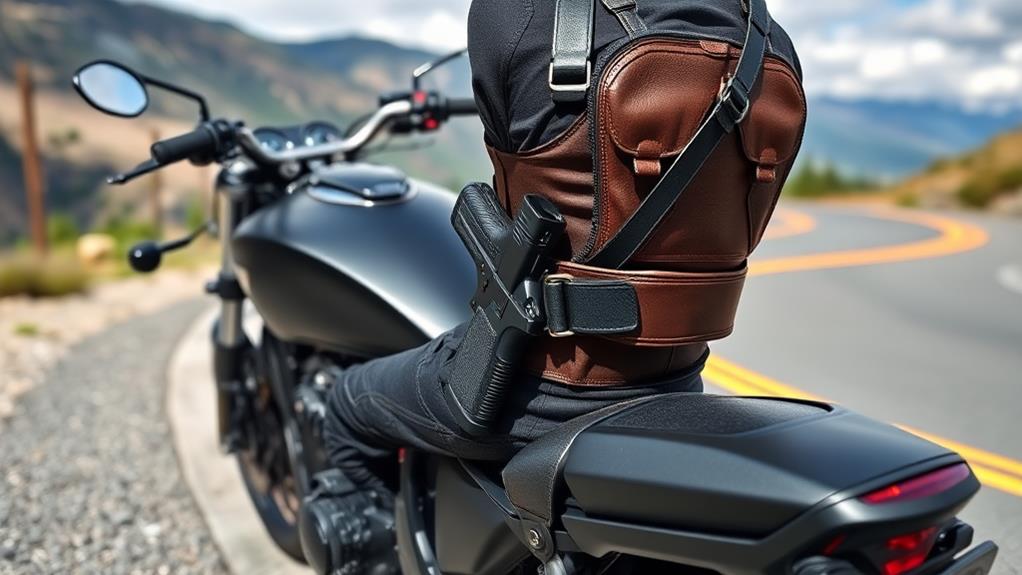
How do you guarantee your motorcycle setup complements your firearm carry strategy? Confirming compatibility between your motorcycle and firearm is essential for safety and accessibility. Here are some key considerations:
- Motorcycle Features: Your bike should have ample storage options, like a Touratech top case, to securely hold your firearm and gear.
- Accessibility: Choose carry methods that allow for quick access. A tank bag can be convenient, but verify it suits your riding style.
- Riding Conditions: Be mindful of the terrain. On dirt roads, your firearm should be easily reachable without compromising your riding safety.
- Protection: A bash plate can shield your firearm from impacts during off-road rides.
On-Body Vs. Off-Body Carry
When it comes to carrying a firearm while riding, choosing between on-body and off-body methods is essential for both safety and accessibility. I've found that each method has its pros and cons, and knowing them helps in making an informed choice.
- On-Body Carry: This method provides immediate access to your firearm, making it ideal in critical situations where speed matters.
- Off-Body Carry: Options like tank bags or backpacks can secure firearms but may slow down retrieval during emergencies.
- Situational Suitability: Depending on your riding conditions, one method may be more practical than the other, especially in remote areas.
Ultimately, assess your unique needs and comfort level to determine which carrying method works best for you.
Quick Access Techniques
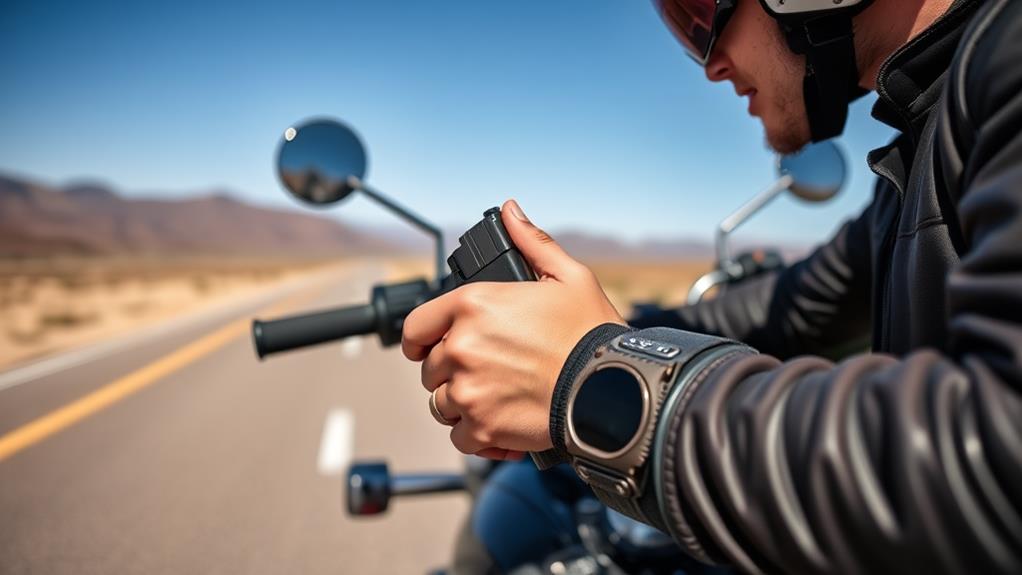
While riding, having quick access to your firearm can be crucial in emergencies, so I've developed several techniques to guarantee I can draw my weapon efficiently. Here are some methods I use:
- Positioning: I carry my firearm in a shoulder holster, allowing for a swift draw while seated. This keeps it accessible without hindering my riding posture.
- Practice: I regularly practice drawing my weapon while on my bike in a controlled environment. This helps build muscle memory and confidence.
- Clothing Choices: I wear riding jackets with concealed compartments, making sure my firearm is secure yet accessible.
- Routine Checks: I perform regular checks to confirm my firearm is properly secured and easily reachable.
These techniques help me stay prepared, enhancing my safety on the road.
Navigating Risks While Riding
Being prepared with quick access techniques has helped me stay vigilant on the road, but managing the risks that come with riding a motorcycle requires constant awareness and proactive measures. Here are three key strategies I focus on:
- Stay Alert: I always keep my eyes moving, scanning for potential hazards, whether it's a driver acting erratically or an unexpected obstacle in the road.
- Plan Your Route: I map out my rides to avoid high-traffic areas and known trouble spots, especially when traveling through remote locations.
- Have an Exit Strategy: I continually assess my surroundings and think about potential escape routes in case a situation escalates.
Emergency Preparedness Strategies

Emergency preparedness is essential for anyone who rides a motorcycle, especially in unpredictable environments. Here are some strategies I use to stay prepared:
Planning Routes
– Always plan your route ahead, considering potential hazards and available services.
Communication
– Carry a fully charged phone and familiarize yourself with emergency contacts.
First Aid Kit
– I keep a compact first aid kit accessible; it includes bandages, antiseptic wipes, and pain relievers.
Firearm Accessibility
– Make certain your firearm is secure but easily reachable in emergencies. Practice drawing it while seated on your bike.
Gear Maintenance
– Regularly check your motorcycle's condition, including tires and brakes, to avoid breakdowns.
Safety Measures for Riders
Staying safe on the road goes hand-in-hand with my emergency preparedness strategies. I prioritize several safety measures to guarantee a secure riding experience while carrying my firearm.
- Wear Appropriate Gear: I always don protective clothing, including a helmet, gloves, and jackets with armor. This gear minimizes injuries in case of an accident.
- Stay Aware of Surroundings: I maintain constant vigilance, looking for potential hazards and threats. My ability to assess situations quickly can make a significant difference.
- Plan Routes Carefully: I choose well-traveled roads and avoid isolated areas when possible. This planning helps reduce risks, especially when carrying a firearm.
Building a Supportive Community
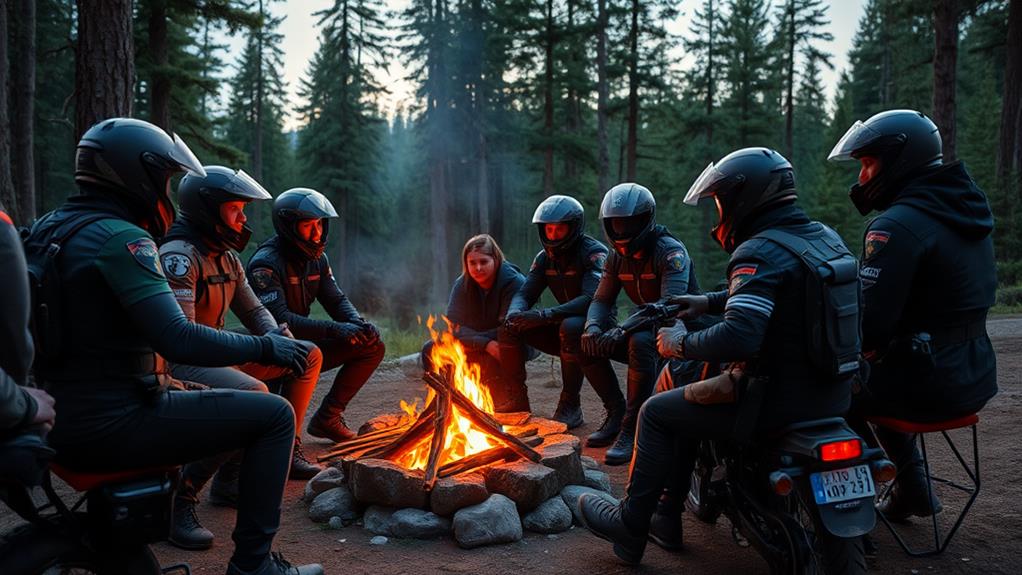
A supportive community is essential for anyone passionate about motorcycle riding and personal safety. Engaging with fellow riders helps us share valuable insights, experiences, and resources. Here are some key aspects of building this community:
- Networking: Attend local bike meets or clubs to connect with like-minded individuals.
- Online Platforms: Join forums or social media groups focused on motorcycle safety and firearm carrying.
- Knowledge Sharing: Organize workshops or discussions to educate members on safe firearm handling and riding techniques.
- Encouragement: Foster an atmosphere where everyone feels comfortable discussing their concerns and experiences.
